


Apr. 16, 2026
Publisher: Shiseido
R&D/Supply Network
Shiseido Discovers That Age-Related Uneven Arterial Blood Flow Causes Facial Sagging
Safflower Extract and Niacinamide Regulate Blood Flow Balance and May Improve Facial Sagging

Shiseido Company, Limited (“Shiseido”), in collaboration with the University of Wisconsin–Madison, investigated age-related changes in arteries and muscles of the face using magnetic resonance imaging (MRI) and discovered that age-related uneven distribution of blood flow in arteries causes facial sagging. The study also found that safflower extract (“benibana extract”) and niacinamide help regulate blood flow balance.
Part of the results of this study were presented orally at the International Society for Magnetic Resonance in Medicine Annual Meeting & Exhibition held in June 2023.
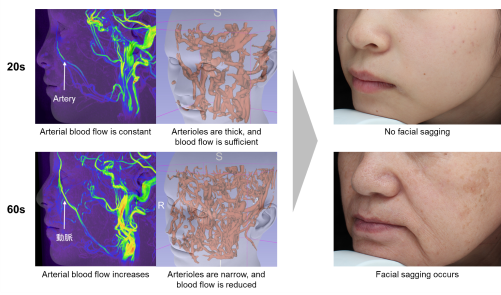
Figure 1 Age-related changes in arterial blood flow and facial sagging
Download Small Image[192KB] Download Large Image[1715KB]
Research Background
Shiseido's prior research on blood vessels revealed that capillaries thin and weaken with age, leading to lower skin elasticity. These studies also showed that capillary condition is closely related not only to age-related spot formation but also to the improvement process of aged spots. However, age-related changes on larger blood vessels located deeper than capillaries were unknown.
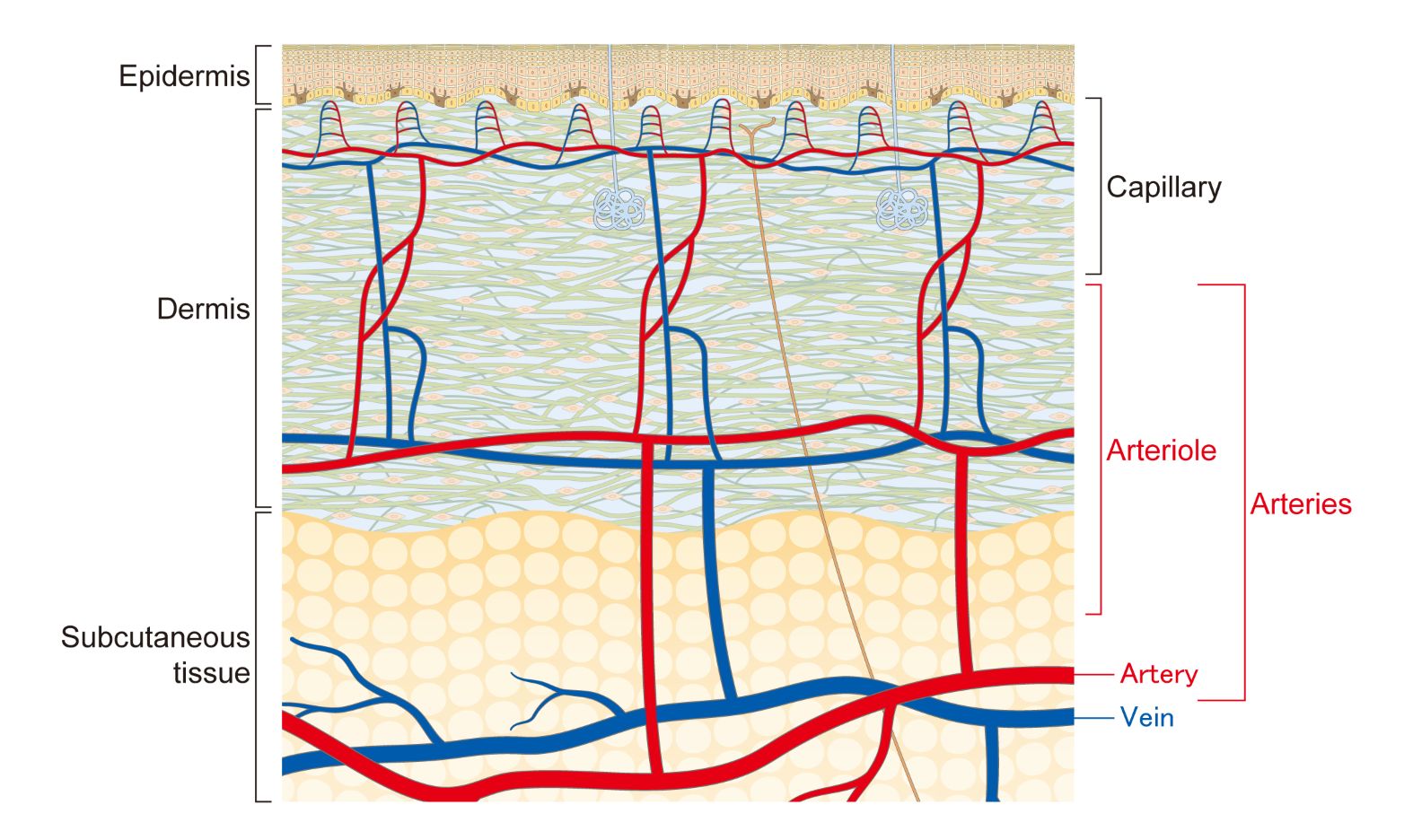
Shiseido, in collaboration with the University of Wisconsin–Madison, used MRI to figure out age-related changes in arterioles that connect the facial arteries to the capillaries, thereby examining overall blood flow in the face (Figure 2). Furthermore, by investigating facial muscle condition between the arterioles and the skin, it sought to identify the causal relationship among them.
Unbalanced Blood Flow in Arteries
Arteries located in the subcutaneous tissue of the face are the main blood vessels that transport blood from the neck to the face, delivering nutrients and oxygen to the skin and muscles. The arterioles that branch from these arteries finely regulate blood flow and play a role in distributing blood to every corner of the skin via capillaries.
Imaging analysis of individual blood vessels using magnetic resonance angiography (MRA) revealed that in younger skin, blood flow in arteries and arterioles was constant and balanced. In contrast, in aged skin with facial sagging, blood flow in arteries and arterioles showed differences and imbalance (Figure 3).
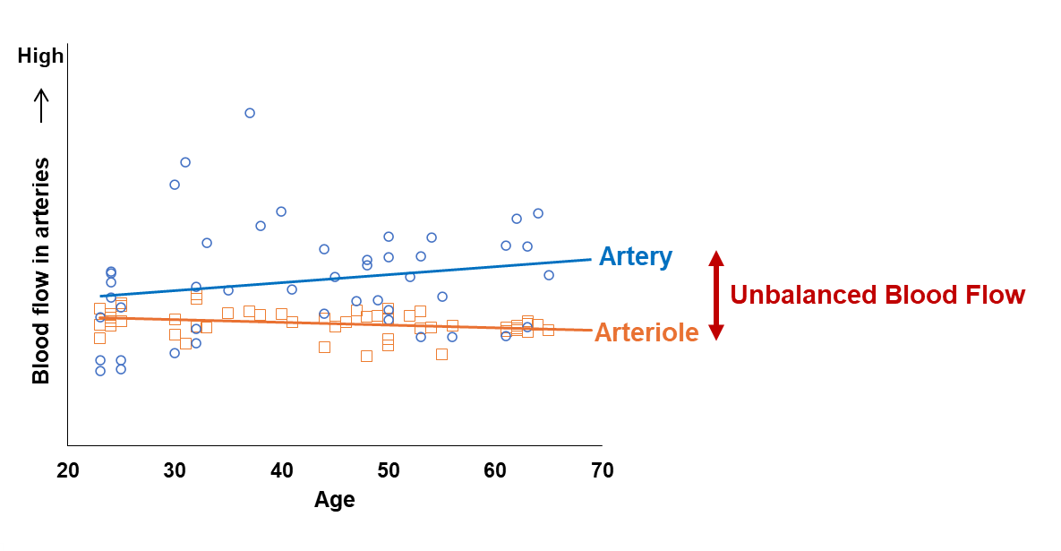
Reduced Blood Flow in Arterioles Affects Muscles, Causing Facial Sagging
Next, Shiseido examined the condition of the muscles between the arterioles and the skin. Shiseido's prior research on facial sagging revealed that decreased facial muscle function is a contributing factor. In this study, using MRI to analyze the zygomaticus major and levator labii superioris, mimetic muscles in the cheek, and the masseter muscle, a masticatory muscle. The findings showed that zygomaticus major muscle deteriorated with age and exhibits fat infiltration, a condition in which fat cells enter the muscle. These results suggest that reduced blood flow in arterioles leads to insufficient nutrient supply to the muscles and that deteriorated zygomaticus major muscle causes facial sagging (Figure 4).
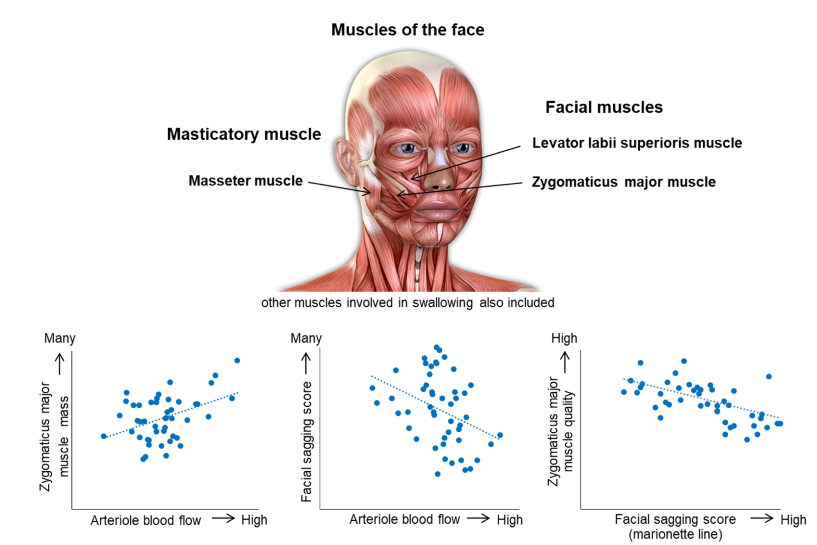
Figure 4 Relationship between reduced blood flow to the zygomaticus major muscle and facial sagging
Download Small Image[177KB] Download Large Image[423KB]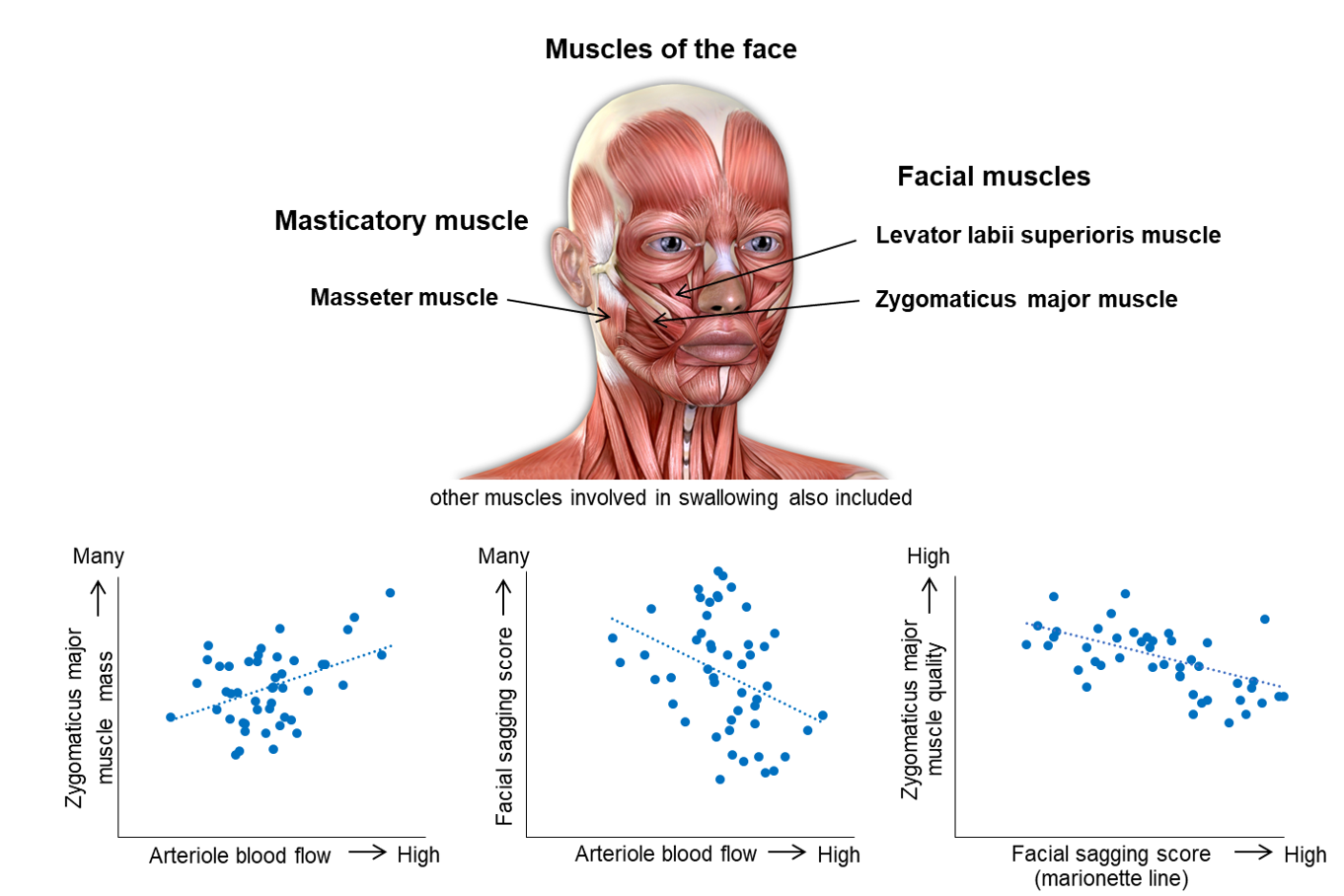
Ingredients that Regulate Function of Sympathetic Nervous System, which Controls Blood Flow
To balance blood flow, Shiseido focused on the sympathetic nervous system, which controls blood flow in vessels. The sympathetic nervous system regulates the vascular tone and maintains blood flow balance. When vascular tone increases, blood vessels constrict, reducing blood flow. Conversely, decreased vascular tone leads to vasodilation and increased blood flow. This regulatory function is known to decline as oxidative stress accumulates with age.
In this study, using a cultured human sympathetic neuron derived from induced pluripotent stem (iPS) cells, Shiseido assessed the oxidative stress tolerance of the sympathetic nervous system. The results showed that both benibana extract and niacinamide enhanced resistance to oxidative stress (Figure 5). Furthermore, combining these extracts produced an addictive effect compared with either one alone.
<Future Prospects>
Shiseido has provided new insights into the interrelation of blood vessels of the face by combining result from the state of arteries and age-related changes in blood flow with the knowledge accumulated through capillary research. Moving forward, the company will advance research into blood vessels and create new value that addresses consumers' aging concerns by developing solutions that leverage the synergistic effects of ingredients, including benibana extract.
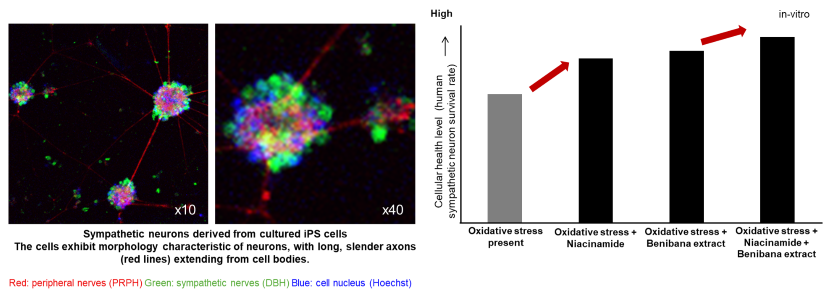
Figure 5 iPS cell-derived human sympathetic neurons and survival rate under oxidative stress
Download Small Image[191KB] Download Large Image[944KB]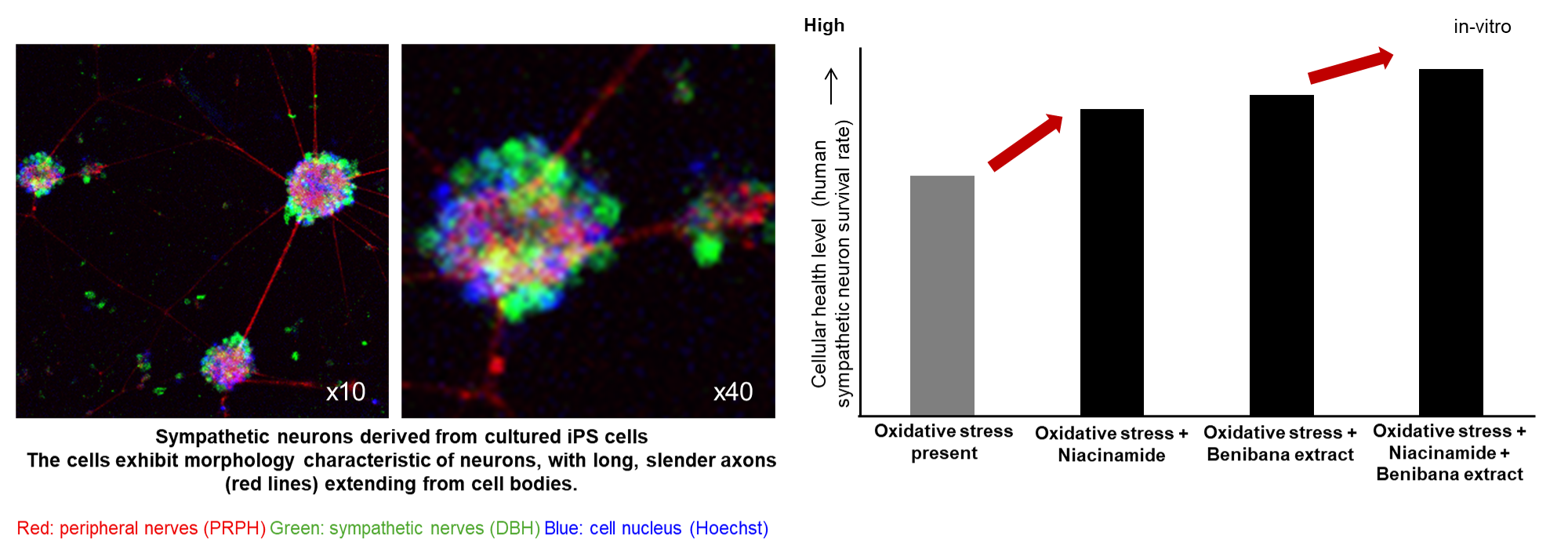

The video below provides a visualization of this research
*The content of the release is correct as of the time of release, but please note that it may in some cases differ from the latest information.
Related News
Jul. 17, 2026
Shiseido Discovers Dual Effect in Cilantro Fruit Extract: Eliminating Senescent Cells and Increasing Normal Cells in Skin
Jul. 16, 2026
Shiseido Announces Recipients of the 19th Shiseido Female Researcher Science Grant
Jul. 6, 2026
Shiseido Discovers “Ring Collagen,” a Collagen Structure That Creates Tension to Maintain Facial Shape