


Dec. 15, 2025
Publisher: Shiseido
R&D/Supply Network
Shiseido Develops Water-Based, New-Concept Sunscreen Technology, Providing Relief from Sweat, Humidity, and Other Daily Stresses
- Maintains High Water Resistance and UV Protection While Adjusting Moisture Content on Skin Surface in Response to Humidity Changes in External Environment -

Shiseido has developed a new water-based (Oil-in-Water type)* sunscreen technology that maintains high water resistance and UV protection while adjusting the moisture content on the skin surface in response to humidity changes in the external environment, such as intense, steamy heat or dryness from refrigerated air conditioning.
This technology uses a soap-derived ingredient that reacts with metal ions contained in sweat and seawater, forming a special structure around the coating film on the skin surface to improve water repellency and adhesion. Water-based sunscreens are characterized by a light feel, the ability to blend easily into the skin, and minimal stickiness. However, they were previously less resistant to sweat and water, requiring UV scattering agents or film-forming agents to enhance water resistance. Now, without relying on them, it is possible to form a film that is lighter than water, flexible, and resistant to creasing. This film helps achieve a transparent finish with less white cast or stain on black clothes, while offering long-lasting water resistance and UV protection.
Additionally, previous Shiseido studies have shown that sudden changes in humidity (environmental shocks) trigger the inflammatory factor IL-1α, which causes age spots. Now, with the application of this technology** to spontaneously control moisture transmission in response to changes in external humidity, moisture on the skin surface is trapped and retained under dry conditions while excessive moisture is released under humid conditions. This helps maintain a consistent moisture level on the skin surface at all times, which, in turn, is expected to inhibit IL-1α activation.
Furthermore, the soap ingredients used in this formulation have been optimized for leave-on products, eliminating concerns about soap residue on the skin. In addition, excluding UV scattering agents improves cleansing performance, leaving the skin soft and moisturized after washing.
A part of the results from this study was presented at the 3rd Annual Congress of the Society of Cosmetic Chemists of Japan (SCCJ), held from December 8 to 10, 2025.
* The water-based (Oil-in-Water type) ingredient is characterized by a light feel during application, the ability to blend easily into the skin, and a less sticky texture. However, it is generally considered to have low water resistance and does not hold up well with sweat and water. On the other hand, while it has a heavy texture, the oil-based (Water-in-Oil type) ingredient is highly water- and sweat-resistant, with excellent moisture retention.
** Shiseido Develops Technology to Spontaneously Control Moisture Transmission in Response to Humidity Changes in External Environment (2022)
https://corp.shiseido.com/jp/newsimg/3507_d7h51_jp.pdf (in Japanese)
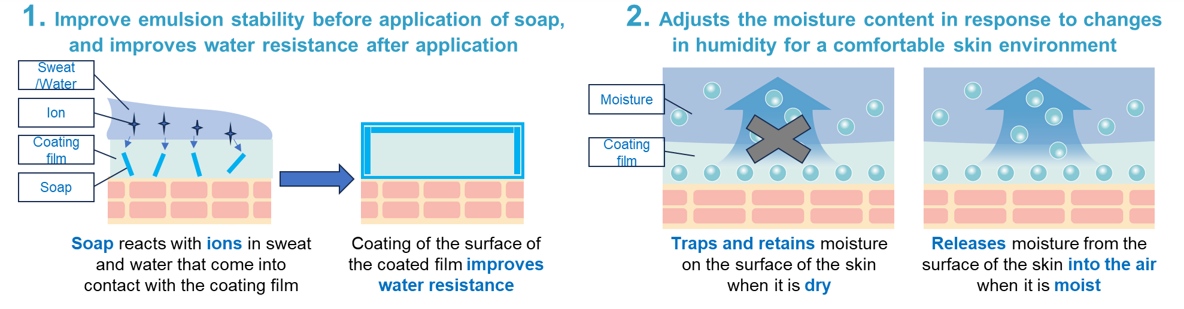
Figure 1 New base agent (conceptual illustration)
Download Small Image[144KB] Download Large Image[144KB]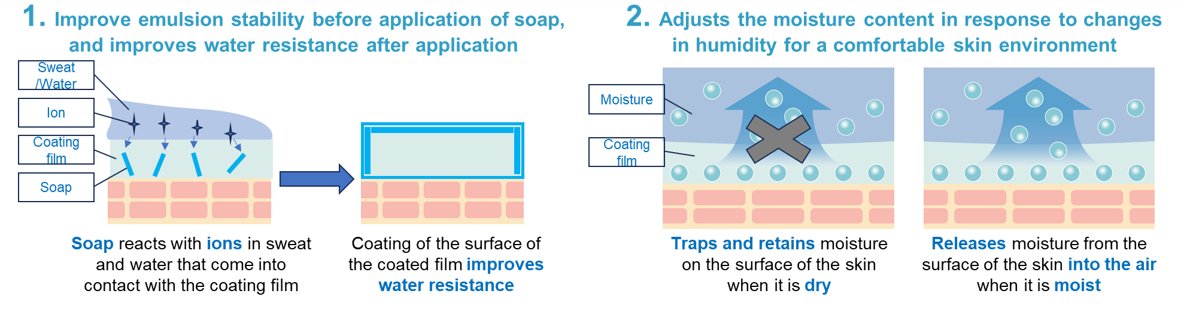
Research Background
Water-based sunscreens have been traditionally popular for daily use because of their lightweight feel. However, they are considered less effective with sweat and water, as the UV protection film tends to deteriorate. Consequently, although it can lead to a white cast, stickiness, or sunscreen stains on clothing, mixing multiple UV scattering and coating agents to improve water resistance is common in the development of sunscreen formulations. Moreover, since Shiseido believes that both the effectiveness of sunscreen and its ease of use—making it something you want to wear every day—are equally important when protecting skin from UV rays, it focused on developing new formulations that will reduce daily stressors, such as environmental shocks.
Features of Water-based Sunscreen Technology Founded on New Concept
1. Discovery of high-water resistance in UV protective film emulsified with soap
Inspired by the fact that soap becomes less soluble in water when it reacts with metal ions like calcium and magnesium, Shiseido looked to improve the water repellency of the sunscreen film. The ”soap” created by neutralizing fatty acids*** with alkalis can act as a surfactant when dissolved in water, emulsifying oily things like UV absorbents and water-based components, thus helping to keep the product stable. Using this mechanism, water repellency was enhanced as these components reacted (bonded) with metal ions found in sweat and seawater to form a special structure on the surface of the coating film after application (Figure 2). On this occasion, Shiseido has succeeded in developing a stable base agent by using saturated fatty acids with relatively long chains and appropriate organic bases as neutralizers in a specific ratio. What is more, since only the coating film's surface needs to react to provide water resistance, only a small amount of the required metal ions is needed, and it can also be applied in the winter when people tend to sweat less.
2. Optimizing soap ingredients in sun care formula
Soap emulsification has thus far been a well-known approach in skincare research. But despite that, studies on its use in sunscreens have made little progress, and there are no examples of its use to improve water resistance.
To achieve high UV protection, blending multiple oils and exploring soap component combinations that could stabilize the oil mixture was necessary.
In skincare research, emulsifiers other than soap ingredients are used as auxiliary agents to enhance stability. However, when applied in sun care, fatty acids tend to crystallize and become unstable due to their relationship with the oil content required for soap formation. In addressing these challenges, it was found that using saturated fatty acids with relatively long chains and appropriate organic bases in a specific ratio to form soap components, along with emulsifying solely with these soap components, can prevent fatty acid crystallization. This approach allows oil components used in sun care to be emulsified stably. Due to this, an unprecedented lightweight feel and a transparent finish with no stickiness or heavy feeling on the skin can be achieved without UV scattering or coating agents, while also offering high UV protection and water resistance. It is also expected to prevent the sunscreen from leaving white stains on black clothes (Figure 3). ****
3. Responds to humidity changes in the external environment and inhibits the activation of IL-1α, which causes age spots
Previous Shiseido studies have shown that sudden changes in humidity (environmental shocks) trigger the inflammatory factor IL-1α, which causes age spots. IL-1α stimulates melanocytes to produce excess melanin, which accumulates in the skin and leads to age spot formation. At the same time, it has been shown that under such environmental shocks, the stratum corneum shrinks, skin texture becomes uneven, and barrier and water-retention functions decline, making the skin more vulnerable to UV damage. This time, by adjusting the skin's surface moisture content in response to external humidity changes, a comfortable skin environment will be created, and the activation of IL-1α will also be suppressed.
*** Fatty acids are organic compounds made up of carbon, hydrogen, and oxygen, and they are the fundamental parts of lipids. Fatty acids have a chain-like structure of carbon atoms and are classified as ”short chain fatty acids,” ”medium chain fatty acids,” or ”long chain fatty acids” based on the length of their carbon chain. Fatty acids without double bonds between carbon atoms, such as the palmitic acid and stearic acid, are called ”saturated fatty acids,” while those with double bonds are known as ”unsaturated fatty acids.”
**** Patent pending
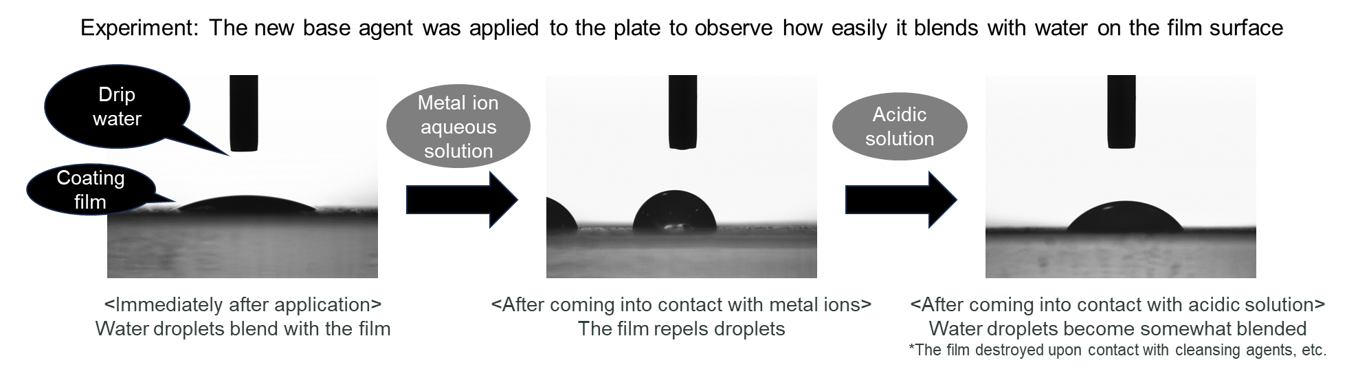
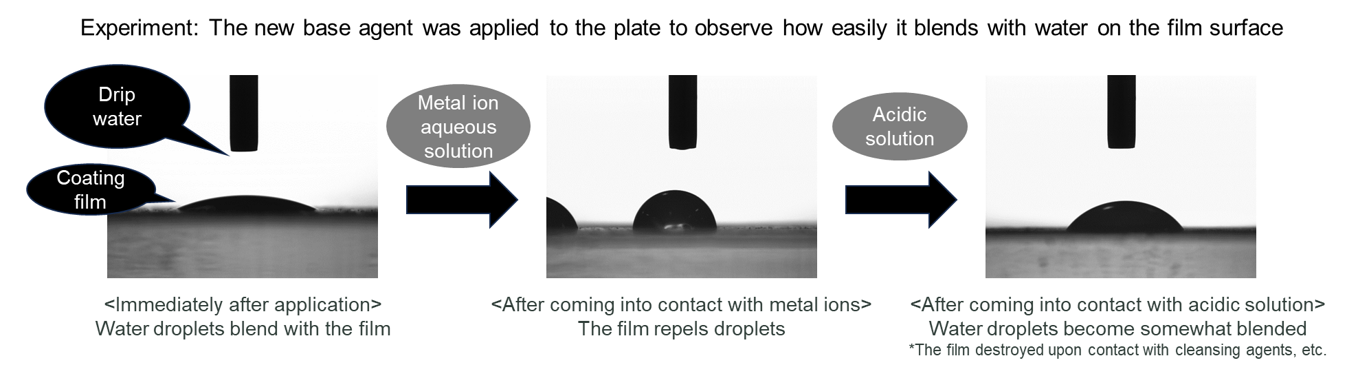
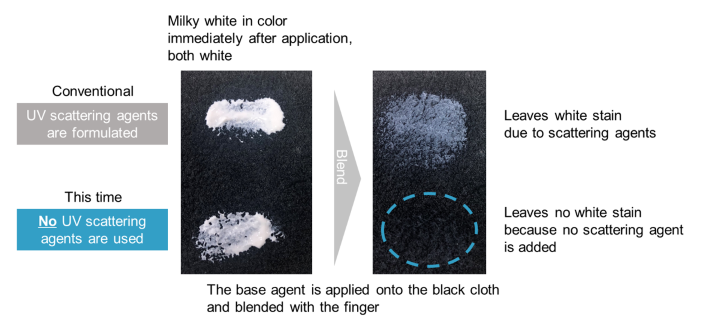
Figure 3 Transparent finish, with less sunscreen staining on black cloth
Download Small Image[174KB] Download Large Image[413KB]
Future Prospects
To date, achieving both ”high UV protection” and ”comfort” has been challenging in sunscreen development. Moreover, products that address daily stress, discomfort, and environmental considerations–while going beyond merely covering the skin surface to block UV rays–are limited. In the future, Shiseido will continue to pursue the creation of a society where everyone can live freely and confidently in the sun by developing technologies that benefit both people and the environment–supporting the daily lives of consumers.
*The content of the release is correct as of the time of release, but please note that it may in some cases differ from the latest information.
Related News
Jul. 17, 2026
Shiseido Discovers Dual Effect in Cilantro Fruit Extract: Eliminating Senescent Cells and Increasing Normal Cells in Skin

Jul. 16, 2026
Shiseido Announces Recipients of the 19th Shiseido Female Researcher Science Grant
Jul. 6, 2026
Shiseido Discovers “Ring Collagen,” a Collagen Structure That Creates Tension to Maintain Facial Shape