RESEARCH
Clarifying Expectations to Drive Teams
- Inclusive Management in Practice -
December 2025 (Japan)


“I want my members to work more autonomously, but I can't seem to convey that.”
“I gave feedback, but the response was lukewarm.”
Have you ever felt this way as a manager?
Balancing team performance with individual growth is a major daily challenge. At Shiseido Group, we have introduced an evaluation system called “Performance Management” to support both employee development and business growth. This approach encourages regular communication between managers and team members, using goal-setting and feedback to enhance individual contributions—both in terms of results and behavior.
Our previous analysis revealed that this system is closely linked to employees’ sense of inclusion—feeling “I belong here” and “I can work as my authentic self.” (See previous article here.) In this follow-up, we explore how clarifying expectations can provide insights for building an inclusive workplace.
INDEX
01
Clear Expectations and Feedback Cultivate Inclusion
Performance Management aims to strengthen results through ongoing dialogue between managers and team members throughout the year.
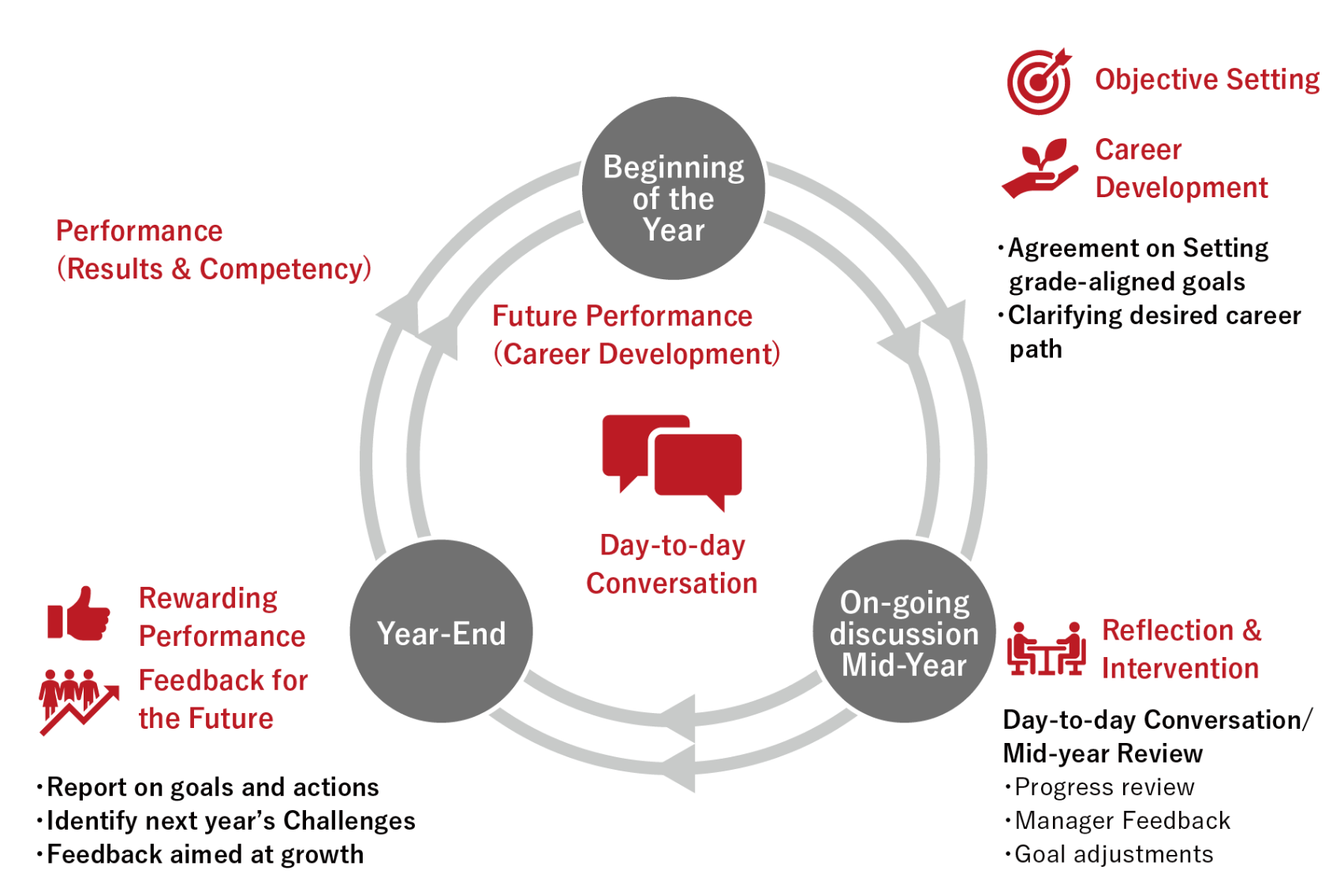
So, how does this relate to inclusion? Shiseido DE&I Lab hypothesized that when team members clearly understand what is expected of them and receive actionable feedback and support from their managers, it leads to a stronger sense of belonging and confidence in expressing their unique abilities.
To examine this, we analyzed internal survey results in Japan and classified organizations into four groups based on two factors related to Performance Management:
1.“I have a clear understanding of what is expected of me.”
2.“I receive feedback that helps me improve my performance.”
The four groups:
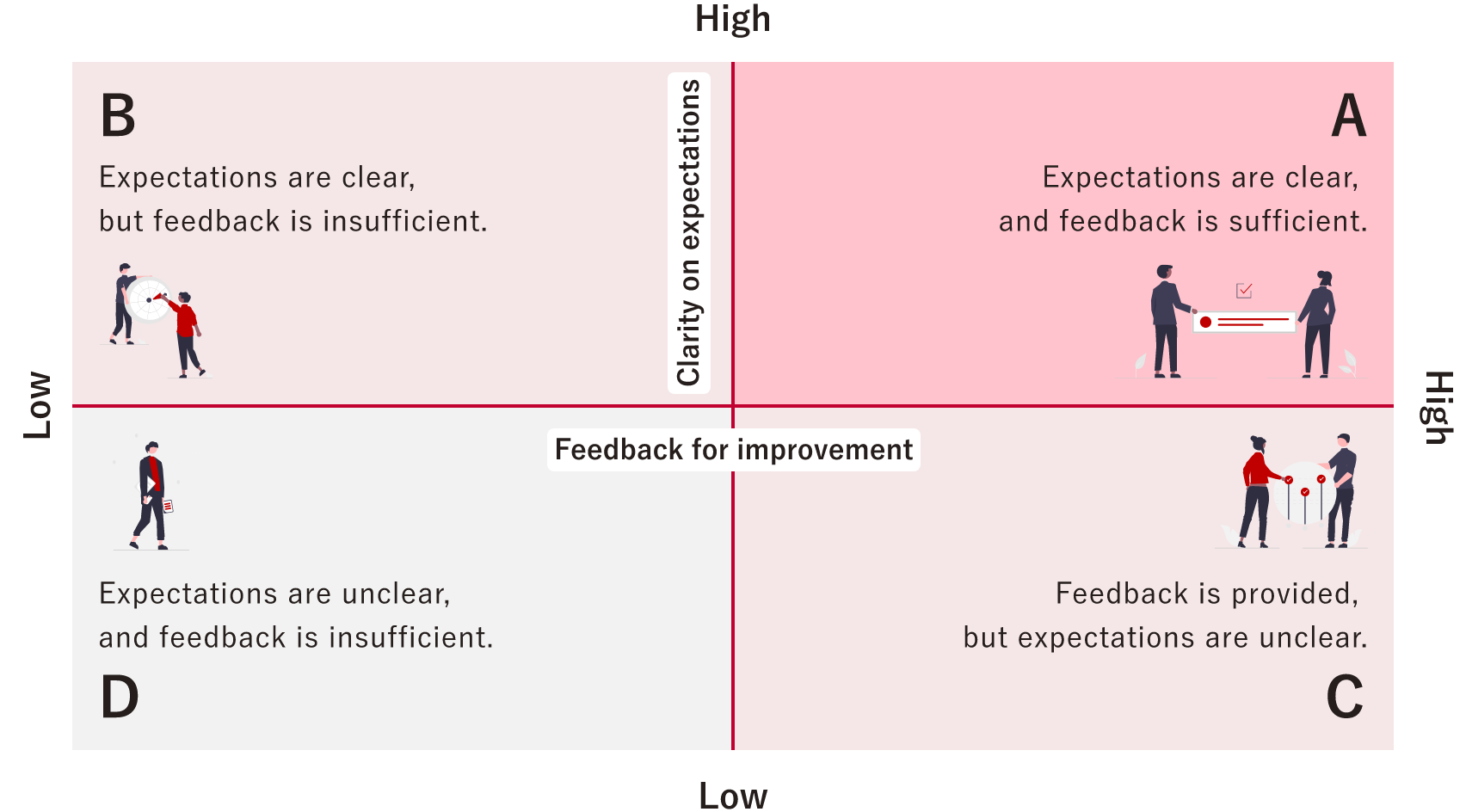
As a result, the group with the highest inclusion score was Group A, where employees clearly understood expectations and felt they received helpful feedback from their managers.
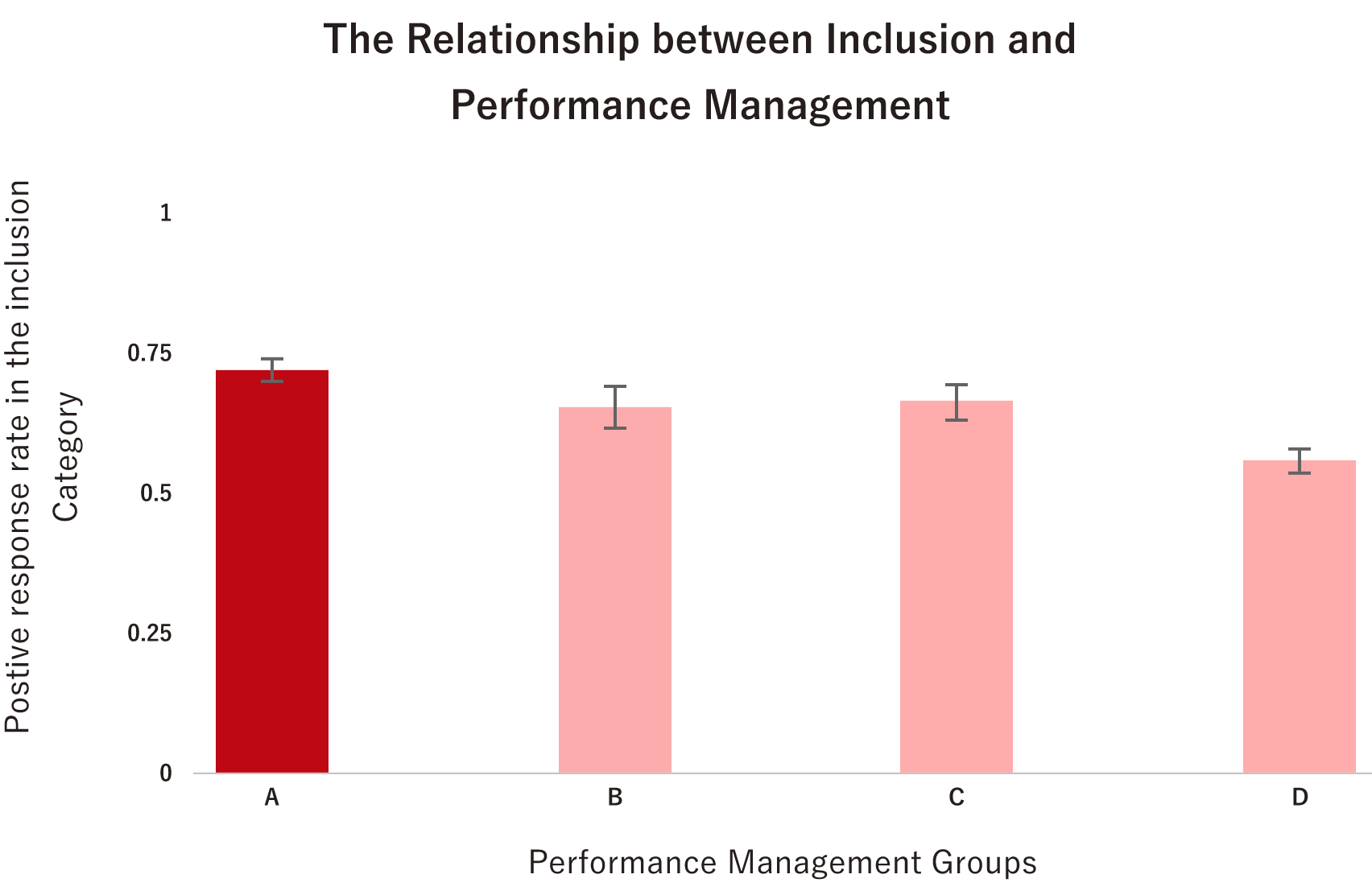
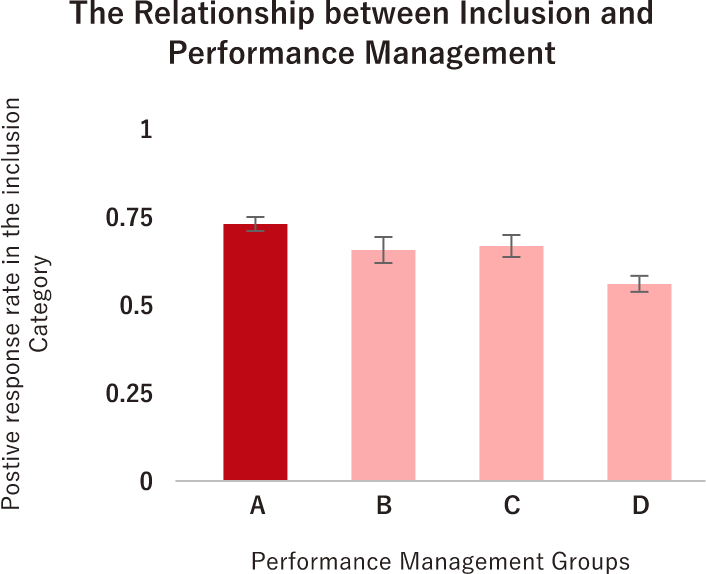
This suggests that when employees know what is expected and to what extent, and can draw insights from feedback, they feel empowered to contribute authentically as a member of the team. Which group does your team fall into?
02
Three Practical Ways to Clarify Expectations
How can managers make expectations clear? Here are three practical approaches based on internal best practices:
1. Quantify and contextualize objectives
For roles with measurable targets—such as sales or contract numbers—agreement on expectations is relatively straightforward. But for qualitative goals like “improve work quality” or “mentor new members,” misalignment often occurs.
One team with a high Performance Management score added quantitative elements to qualitative goals to clarify the direction:
“Complete tasks previously handled by three people with two.”
“Reduce project completion time from six months to three.”
“Enable new members to create data independently by September.”
Adding numbers or deadlines makes success criteria visible and easier to share. Furthermore, in such cases, sharing the background and intent behind the goals helps create a sense of understanding and ownership, which in turn encourages autonomy.
“We aim to speed up this process to free time for new projects—your skills will help boost team productivity.”
“Training new members to create data independently by September ensures stability and accelerates overall project quality.”
2. Ensure consistency and fairness
Since 2021, the Shiseido Group has adopted a job-based HR system to clarify roles and required expertise, empowering career autonomy. Performance Management aligns goals with job grades* and job descriptions**, and evaluators calibrate standards to avoid bias. This process minimizes discrepancies and promotes fairness.
*Job grade: A classification system based on roles and responsibilities
**Job description: A document outlining the responsibilities, tasks, and required qualifications for a specific role
3. Ongoing dialogue for course correction
Expectations aren’t “set and done.” Regular dialogue—through weekly or monthly one-on-ones—helps adjust goals as circumstances change. It’s important to discuss not only progress but also career aspirations, linking daily work to future growth. Incorporating feedback and support into these conversations creates opportunities for development.
+Advanced practice: sharing expectations across the team
Some teams share goals openly to ensure transparency and mutual understanding. When new tasks arise, members consult each other based on the objectives and collaborate proactively—building trust and team cohesion.
03
How Clear Expectations Drive Inclusion
Clarifying expectations is not merely about task management; it is a critical element in building the foundation of an organizational culture where every individual can thrive. In this section, we will explore how clear expectations lead to a sense of inclusion and the flow that connects them.
1.Clear understanding of expectations
When employees clearly know what is expected of them and to what extent, they can act without hesitation, and autonomous behavior is encouraged.
2.Autonomous action and support from managers
Once employees begin to take initiative, dialogue with their managers deepens, making it easier to share progress and challenges. As a result, feedback and support become more effective. In fact, autonomous action based on clear goals can serve as a trigger for drawing out support from managers.
3.Recognition of results
When the results of their actions are visible, employees can more easily recognize their own contributions. Clear outcomes also boost motivation to take on the next challenge.
4.Trust building
Acknowledging progress and achievements strengthens trust between managers and team members, as well as within the team. This fosters an environment where people feel safe to express opinions and help one another.
5.Sense of inclusion
Within this trust-based environment, employees begin to feel they can work as their authentic selves. This leads to a genuine sense of inclusion—feeling accepted and able to fully leverage their abilities.
Daily dialogs like “here’s why this goal matters” or “here’s what I expect from you” can transform behavior and team dynamics and strengthen the organization. Clarifying expectations in Performance Management is the first step toward creating an environment where everyone can perform at their best. You don’t need perfection from day one—start small and grow together with your team.
Shiseido DE&I Lab will continue to share insights for creating an inclusive workplace where diverse talent can fully realize their potential.
Statistical Analysis Team:
Shintaro Yamaguchi (University of Tokyo), Yoko Okuyama (Uppsala University), Keisuke Tsugumi (Hitotsubashi University), Yuma Oshima (University of Tokyo), Sae Yamamoto (University of Tokyo)